
Review · CANYONING
Wanaka: Waterfall Climb and Canyon Tour
Twin Falls looks dramatic from the road. In person, it turns into a hands-on day of climbing and canyoning. I love how this tour teaches you real rope skills for a Level 1 cable climb, then lets you use those skills to get up close with the waterfall from above and descend safely on rope. One thing to consider: this is wet, exposed, and physical, so you’ll need a head for heights and comfort moving on steep uneven ground.
The best part is that you’re not just watching nature. You’re earning it—walking through native bush, getting mountain-and-lake views, then rappelling down multiple waterfalls to feel that spray in your face. The group is kept small (up to 6), so the pace stays friendly and you get more time for coaching when you need it.
In This Review
- Key things that make this Wanaka waterfall climb worth your time
- Twin Falls: Two skills in one Wanaka day
- Getting there the easy way: the locked gate near the falls
- What’s included (and why it’s not just a nice-to-have)
- Gear and packing reality: you’ll want dry plans
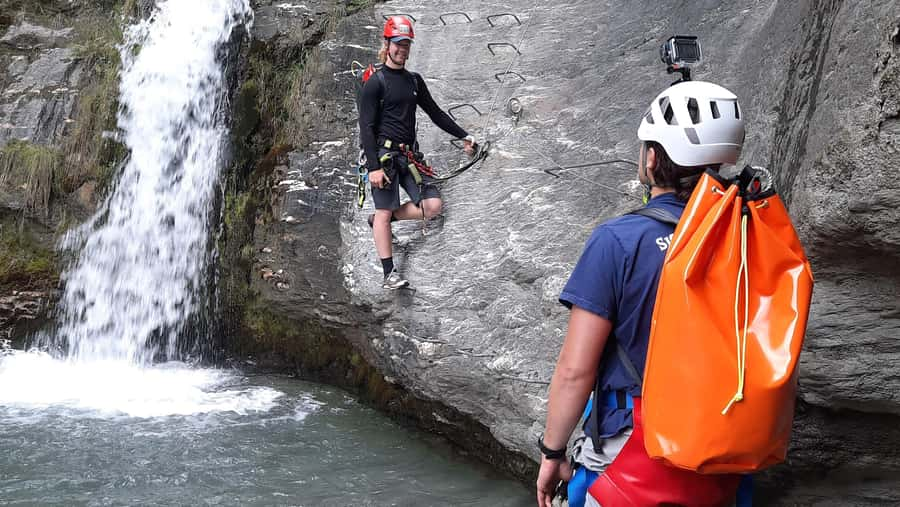
- Starting on the cable climb: what beginner success looks like
- The cliffside trail to the waterfall: getting your bearings
- Abseiling into the right-hand Twin Falls section
- Rappelling down 6 waterfalls: how the adrenaline actually stays fun
- The guided lower on the wire crossing (and your final reset)
- Views you earn: native bush, mountains, and lake air
- Small group touring with Wildwire Wanaka: pace and safety
- Price and value: is $196 “worth it” for Wanaka?
- Who should book this, and who should skip it
- Quick decision: should you book the Wanaka Twin Falls climb and canyon?
- FAQ
- How long is the Wanaka Waterfall Climb and Canyon Tour?
- Where do I meet for the tour near Twin Falls?
- Do I need prior climbing or abseiling experience?
- What’s included in the price?
- What should I bring with me?
- How fit do I need to be?
- Is there an age or size requirement?
- Can I cancel and pay later?
Key things that make this Wanaka waterfall climb worth your time
- Two disciplines, one day: cable climbing skills first, canyoning and abseiling second
- Twin Falls from both sides: climb up, then descend the right-hand section up close
- Ropes and training included: you learn how to climb and descend ropes on the trip
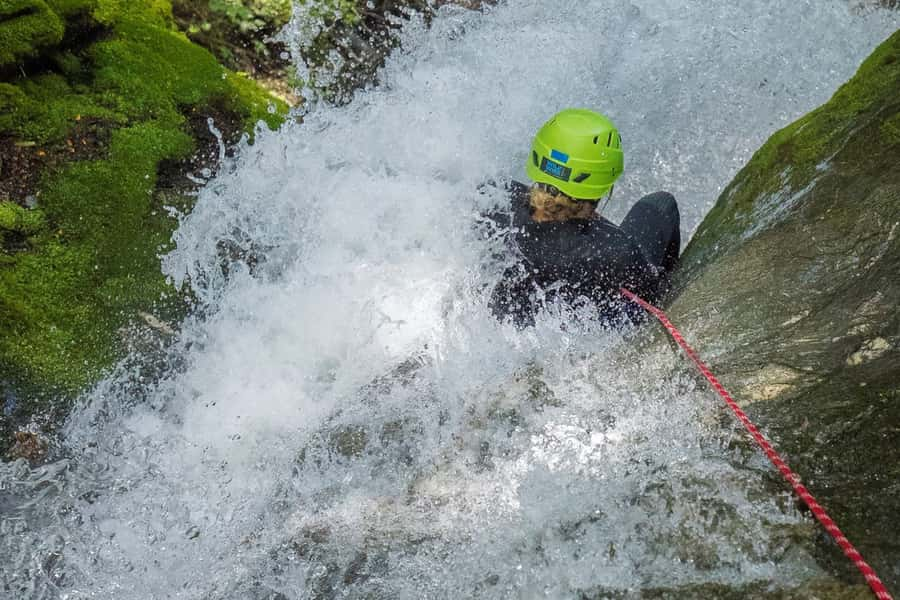
- An adrenaline-driven route: you rappel down 6 waterfalls with a guide
- Native bush + big views: mountain and lake scenery while you move through the terrain
- Small group feel: limited to 6 participants (and you may end up even fewer)
Twin Falls: Two skills in one Wanaka day
If you want active New Zealand that feels personal, this is the kind of day that delivers. The concept is simple: you start with a Level 1 cable climb and some rope basics, then transition to canyoning-style descents at Twin Falls.
That setup matters. A lot of adventure tours are either mostly hiking or mostly adrenaline. Here, you get a true “learn and use it” arc: you practice climbing movements with support, then you apply the same system mindset to abseiling and controlled descents. By the time you’re at the waterfall, you’re not guessing—you’re doing.
And yes, you’ll get close to the falls. The route is designed so you end up feeling like you’re in the middle of the action rather than standing safely far away.
Still mapping out your Queenstown days? Here are more trips we have written up.
- Wildwire Wanaka- Level 2 (4 Hours)
★ 5.0 · 467 reviews - Bike the Wanaka and Hawea Trails
★ 5.0 · 346 reviews - Lake Wanaka Happy Hour Cruise
★ 4.6 · 313 reviews - Small Group Jet Boat Adventure on the Clutha River from Wanaka
★ 5.0 · 302 reviews
Getting there the easy way: the locked gate near the falls
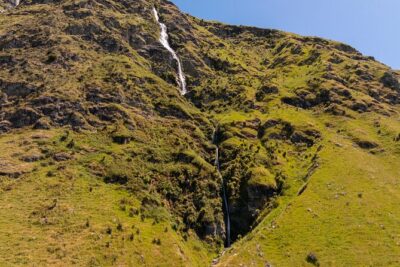
You’ll meet for this tour at a pull-out on the Wanaka–Mt Aspiring Road, west of town, on the lake side route toward Treble Cone Ski Field and Mt Aspiring National Park. About 20 minutes after Wanaka town, there’s a cattle stop. Pull out immediately to the left in front of two massive waterfalls.
You’re looking for a locked farm gate with your local partner’s sign on it. That’s the spot. If you end up on the ski field road or a gravel road, you’ve gone too far.
This meeting point detail matters because it’s the main “make or break” for a smooth start. Show up early, drive slow through the cattle stop area, and keep an eye out for the waterfall view and gate signage. Once you’re there, you’re set.
What’s included (and why it’s not just a nice-to-have)
For $196 per person, the value isn’t only that you get a guide. You also get the safety-and-comfort package that makes a wet, rope-based activity actually doable for beginners.
Here’s what’s included:
- an experienced professional guide
- safety training
- safety equipment
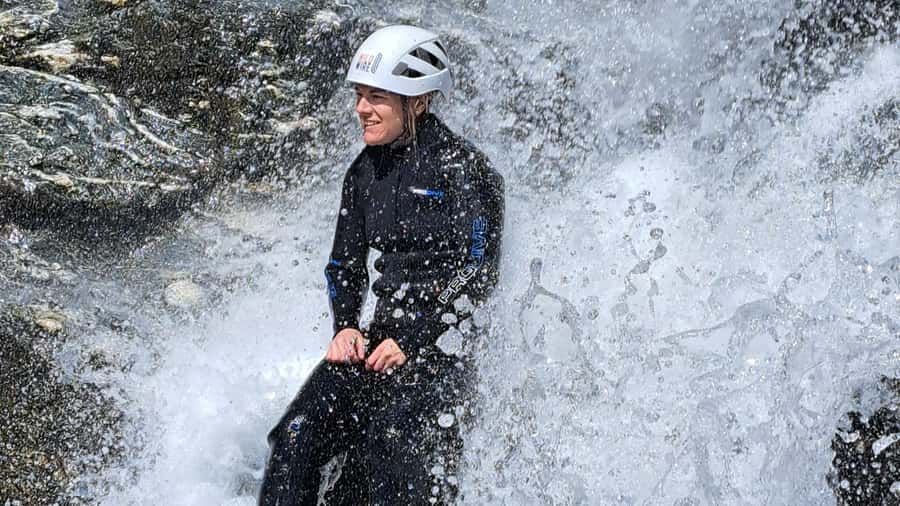
- wetsuit and wetsuit socks
- lunch
That wetsuit detail is key. Even if you’re fit and confident, canyoning-style conditions are still cold and wet. The tour takes care of the core layer that keeps you moving instead of shivering.
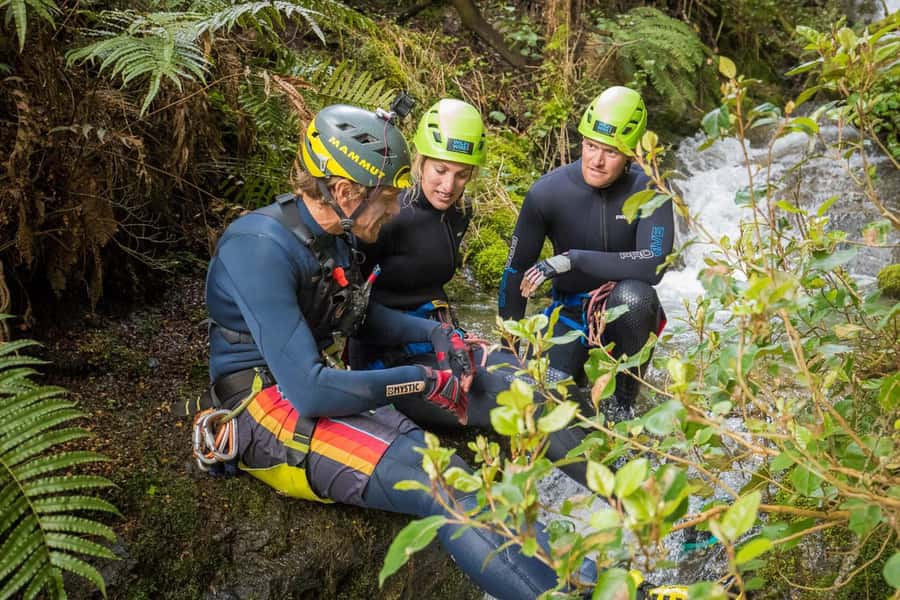
You’ll also be taught how to climb and descend ropes. That means your day isn’t just “follow the leader.” It’s a coached progression, with you learning what to do before the more thrilling bits.
Gear and packing reality: you’ll want dry plans
You should bring:
- swimwear
- towel
- hiking shoes
- water
One more practical note: plan on getting shoes wet. The tour expects you’ll be moving in conditions where sturdy shoes that can handle water help a lot.
If you’re thinking about your phone or camera, a waterproof case is optional. (A normal phone and canyon spray are a bad match.)
Also, bring your water even if you’re thinking it’ll be short and cool. You’ll be active for up to 5 hours, and even in New Zealand conditions that don’t feel scorching, you’ll still get thirsty.
More Wildwire climbs up the Wanaka waterfall
Starting on the cable climb: what beginner success looks like
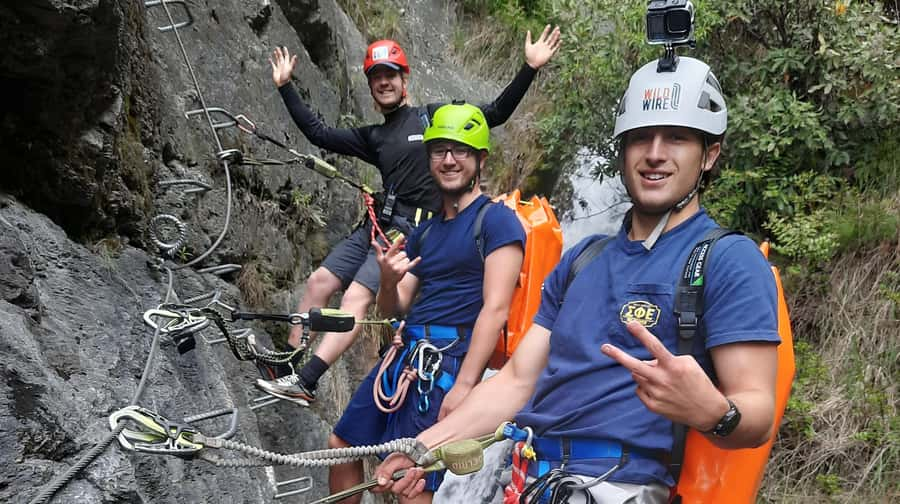
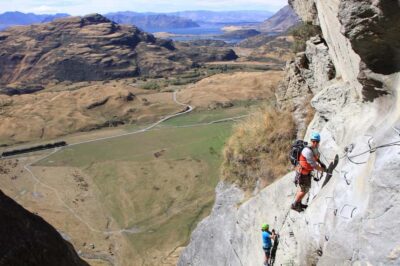
The tour begins with a Level 1 cable climb. That’s your training foundation. You’ll learn the rope and cable movement approach needed to feel stable on a vertical-ish surface—under guidance, with safety systems in place.
This part is where the tour earns trust. A good beginner experience doesn’t throw you onto scary terrain and hope for the best. It teaches you how to move your body, where to place your attention, and how to stay calm while you’re up and exposed.
You should be ready for steep, exposed moments during climbing and transitions, even if the climb level is beginner-friendly. The good news is you’re supported the whole time, and you learn the actions rather than just being told to copy someone.
The cliffside trail to the waterfall: getting your bearings
After the cable section, you’ll follow a cliffside trail to the next-door waterfall. This isn’t just scenery time. It’s part of the learning flow: you move through terrain while staying alert, and you start shifting your mindset from climbing to canyon descents.
You also get that “I’m really here” feeling as you take in the environment—native bush around you and big mountain and lake views overhead and out to the sides. If you’ve ever done a scenic hike, you know the views can feel like a reward at the end. Here, the views are stitched into the activity so you see more than just one point.
One consideration: because the trail involves uneven and exposed terrain, you’ll want to move steadily. If you rush because you’re excited, you’ll feel it in your legs and balance.
Abseiling into the right-hand Twin Falls section
This is the moment most people come for: getting up close and personal with Twin Falls.
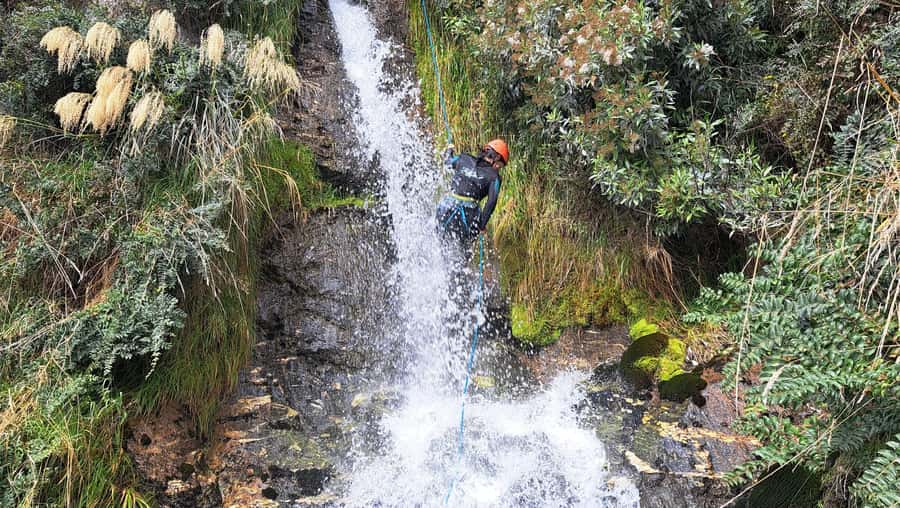
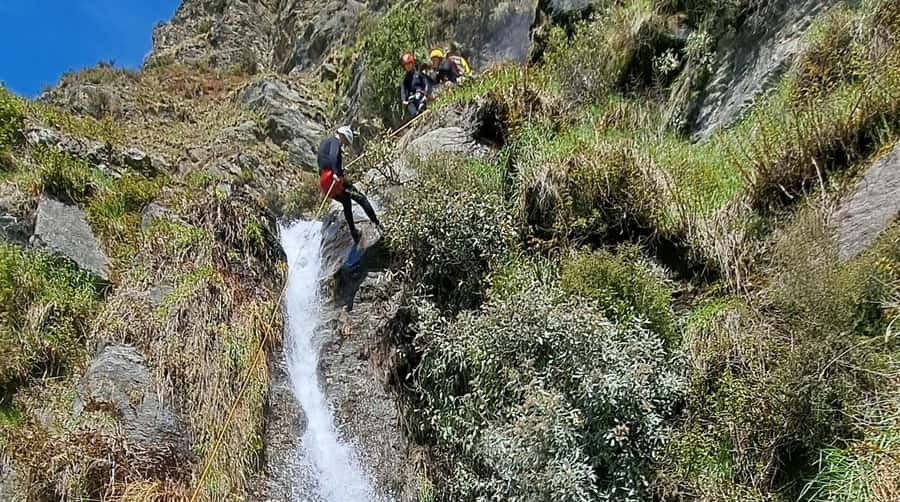
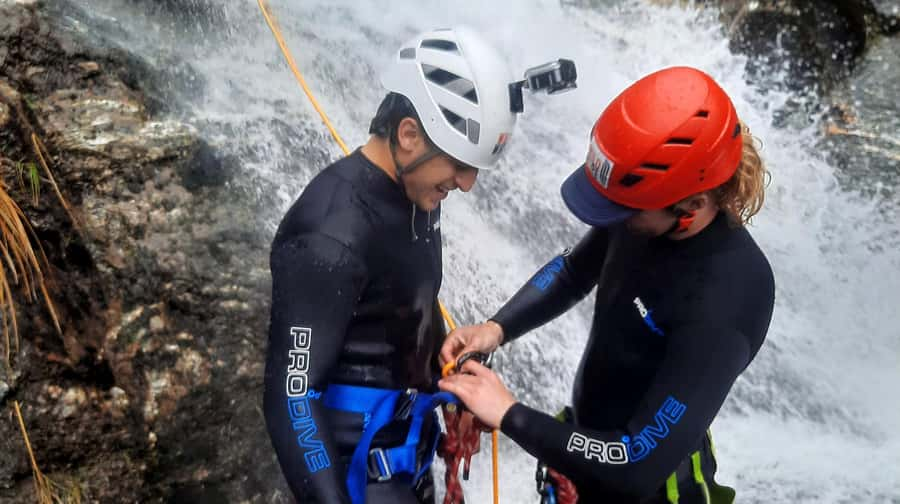
You’ll abseil/rappel the lower section of the right-hand Twin Falls. That descent is where controlled technique matters. You’ll be in a harness and safety setup, with your guide managing the process and teaching you what to do step-by-step.
For beginners, the psychological side is often the biggest hurdle—standing near a drop when your brain is screaming that it’s too steep. A coached start helps you focus on the next action, not the height.
And you’ll feel the waterfall in a physical way. Spray, noise, and damp conditions are part of the experience. That’s not a side effect; it’s the whole point.
Rappelling down 6 waterfalls: how the adrenaline actually stays fun
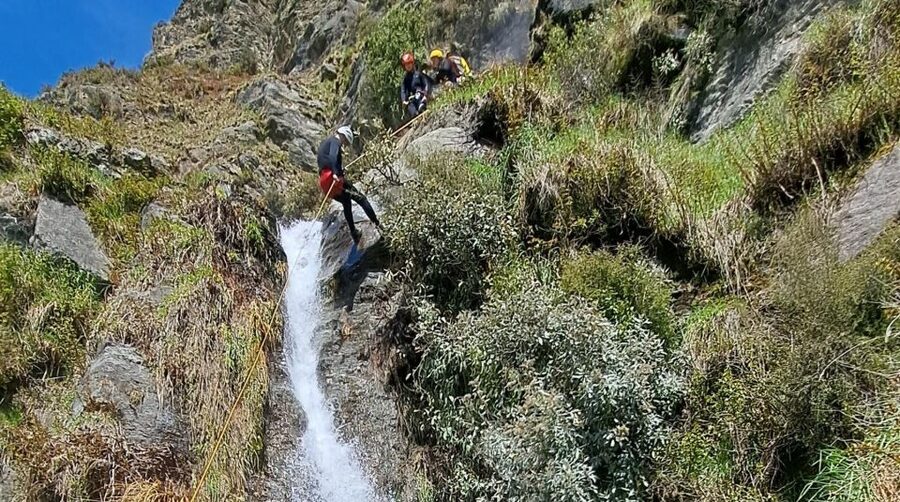
The highlights call out a big adrenaline goal: you’ll rappel down 6 waterfalls. That doesn’t mean you’re doing one endless freefall drop. It means your day includes multiple descents, each with its own moment.
This is where a guide’s experience pays off. With several rope sections, the biggest risk isn’t only falling—it’s getting sloppy when you’re tired or overwhelmed. A good flow keeps you safe and engaged, and you keep practicing the same core rope mindset repeatedly.
A small group also helps. When you’re limited to 6 participants, you’re less likely to feel like you’re waiting around in the wrong moment. That means more time doing, less time idling in wet gear.
The guided lower on the wire crossing (and your final reset)
Your tour finishes with a guided lower on a wire crossing, then a short walk back to the base.
That final section can feel like a “settle in” moment after the waterfall-heavy part of the day. If you’re the kind of person who likes closure—where you can build confidence and finish strong—this wrap-up tends to do that job.
It’s also a practical transition: once the rope work is done, you can shift from adrenaline mode to recovery mode. A short walk means you’re not stuck hiking for hours at the end, and lunch earlier helps you stay functional.
Views you earn: native bush, mountains, and lake air
The tour’s outdoor setting is more than pretty extras. You’re traveling through native bush, and you get repeated sightlines to the mountains and Lake Wanaka region.
That matters because rope-based activities can get intensely focused. If everything is only technical, your brain can fatigue. The scenery gives you mental breathing room while you keep moving.
It also makes photos feel more meaningful. You’re not just taking pictures of waterfalls from one angle. You’re moving through the environment that created those waterfalls in the first place.
And because you’re getting wet, the views don’t feel like a static backdrop. They feel like part of the weather and the terrain you’re actively working with.
Small group touring with Wildwire Wanaka: pace and safety
This is run by Wildwire Wanaka, and it’s designed as a small group experience, limited to 6 participants. That size isn’t just for comfort. It’s also practical for rope safety and instruction.
When groups are smaller:
- you get more frequent coaching
- you’re less likely to feel rushed
- your guide can slow down when someone needs extra clarity
One verified booking highlighted exactly this kind of experience—thrilling but safe, with a very small group (in their case, 3 people) that allowed the team to keep things moving at a pace that felt right. That’s the kind of difference you can feel in real time when you’re learning something technical.
Price and value: is $196 “worth it” for Wanaka?
At $196 per person for a 6-hour guided adventure, you’re paying for more than access to nature. You’re paying for:
- professional instruction (not just a guide following behind)
- safety training and equipment
- wetsuits and wetsuit socks
- lunch
- sustained support during multiple rope descents
If you try to recreate this yourself, the costs and logistics multiply quickly: gear rental, instruction, transportation, and risk management. Here, those pieces come packaged together, and you’re learning the skill process rather than only paying for the thrills.
So for the type of traveler this suits—adventurous, fit beginners who want to learn real rope skills—it’s a fair price. If you’re expecting something casual or mostly scenic, it won’t feel like the best use of time.
Who should book this, and who should skip it
This tour fits best with people who want an active challenge and understand that you’ll be doing more than walking.
It’s suitable for:
- adventurous, fit beginners
- people comfortable with uneven terrain
- people who can move through steep exposed cliffs
- people who are active for up to 5 hours and can handle a head-for-heights environment
You need to be able to walk and stay steady even when you’re tired and wet.
It’s not suitable for:
- children under 14
- people under 3 ft 9 in (120 cm)
- people under 88 lbs (40 kg)
- people over 220 lbs (100 kg)
If you don’t meet the size requirements or you know heights and steep exposure will make you panic, this is the wrong day. It’s not a moral failing; it’s just safety and enjoyment.
Quick decision: should you book the Wanaka Twin Falls climb and canyon?
Book it if you want a hands-on Wanaka experience where you learn skills, not just take a trip. The combination of Level 1 cable climb training plus rappelling down multiple waterfall sections is a rare pairing in one outing.
Skip it if you’re looking for an easy nature walk, or if you dislike getting wet and moving on steep, exposed terrain. Also skip if your body isn’t comfortable with longer active time (up to 5 hours).
If you’re the kind of person who likes learning something new, getting a little spray in your face, and coming away with a real sense of accomplishment, this is one of the better-value adventure days near Wanaka.
FAQ
How long is the Wanaka Waterfall Climb and Canyon Tour?
The tour lasts 6 hours.
Where do I meet for the tour near Twin Falls?
From Wanaka town, drive west on the Wanaka–Mt Aspiring Road toward Treble Cone Ski Field and Mt Aspiring National Park. About 20 minutes in, pull out immediately to the left at the cattle stop area, in front of two massive waterfalls. Meet at the locked farm gate with your local partner’s sign.
Do I need prior climbing or abseiling experience?
No previous abseiling or climbing experience is required, but you do need good fitness and you’ll be taught the skills during the tour.
What’s included in the price?
The tour includes an experienced professional guide, safety training, safety equipment, a wetsuit, wetsuit socks, and lunch.
What should I bring with me?
Bring swimwear, a towel, hiking shoes, and water. You should also plan on getting your shoes wet.
How fit do I need to be?
You should be an adventurous, fit beginner and able to walk on uneven terrain, move through steep exposed cliffs, and stay active for up to 5 hours.
Is there an age or size requirement?
Yes. The tour is not suitable for children under 14, people under 120 cm tall, people under 40 kg, or people over 100 kg.
Can I cancel and pay later?
You can cancel up to 24 hours in advance for a full refund. You also have the option to reserve now and pay later.
Higher Up the Wanaka Falls
- Wildwire Wanaka- Level 2 (4 Hours)★ 5.0 · 467 reviews
- Wildwire Wanaka- Level 1 (2 Hours)★ 5.0 · 112 reviews
- Wanaka: 2-Hour Beginner Waterfall Cable Climb★ 4.9 · 108 reviews
- Wanaka: 4-Hour Intermediate Waterfall Cable Climb★ 5.0 · 66 reviews
Fresh on the Queenstown pages

Canyoning, compared.
 ★ 5.0Queenstown Half-Day Canyoning AdventureFrom $154420 reviews
★ 4.9Half-Day Canyoning AdventureFrom $124163 reviews
 ★ 5.0Half-Day Canyoning in Gibbston Valley from QueenstownFrom $15493 reviews
 ★ 4.7Gibbston Valley Half-Day Canyoning AdventureFrom $11766 reviews
 ★ 4.8Mount Aspiring Full-Day Canyoning AdventureFrom $29814 reviews
 ★ 5.0Mt Aspiring Full Day Canyon ex Queenstown or WanakaFrom $30912 reviews
 ★ 5.0Shotover River Rafting & Skippers Canyon TourFrom $1785 reviews
Browse the lists this tour appears in