
Review · WANAKA WATERFALL CLIMBS
Wanaka: 2-Hour Beginner Waterfall Cable Climb
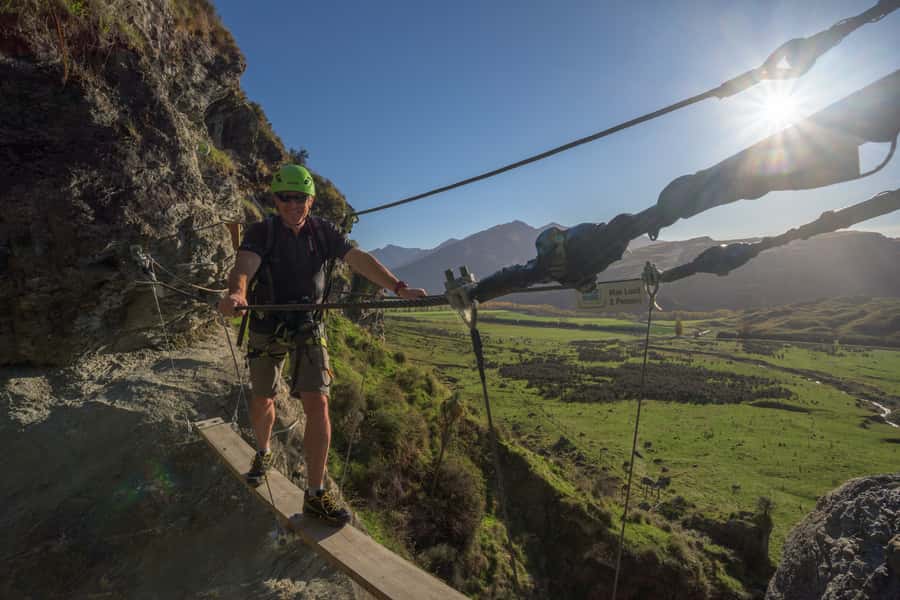
A waterfall cable climb feels like cheating at adventure. You go up a real working farm waterfall using via ferrata kit—cables, iron rungs, pegs, bridges, and ladders—then earn those views over Lake Wanaka and the Southern Alps. I like that the guides keep it beginner-friendly without turning it into a boring safety demo, and you’ll still get proper climbing moments.
Best part for me is the combo of vertical effort and fun “high bits,” like suspension bridge crossings over waterfall pools, with coaching that helps you move confidently even if you’re a bit nervous. One thing to consider: this is not just a stroll—your body needs full mobility, and you’ll be dealing with heights on bridges and cliff sections.
In This Review
- Key Points at a Glance
- Why Twin Falls via ferrata feels different than normal hiking
- Getting to the Wildwire meeting gate near Wanaka
- The safety-first rhythm: helmet, harness, and practice climbing
- Those first climbing lessons: cables and rung technique for beginners
- The waterfall climb itself: 1 hour of bridges, rock, and hidden falls
- The snack and the view stop: farmland, mountains, and Lake Wanaka
- The descent: getting back down in about 15 minutes
- Who should do it (and who should skip it)
- Price and value: what $118 buys you in real terms
- Practical tips that make the climb smoother
- Final call: should you book the Wanaka beginner waterfall cable climb?
- FAQ
- What exactly is the Wanaka 2-hour beginner waterfall cable climb?
- How long does the experience take?
- What should I bring with me?
- Do I need prior climbing experience?
- How big are the groups?
- What are the minimum age and weight requirements?
- Is it safe for someone who’s nervous about heights?
Key Points at a Glance
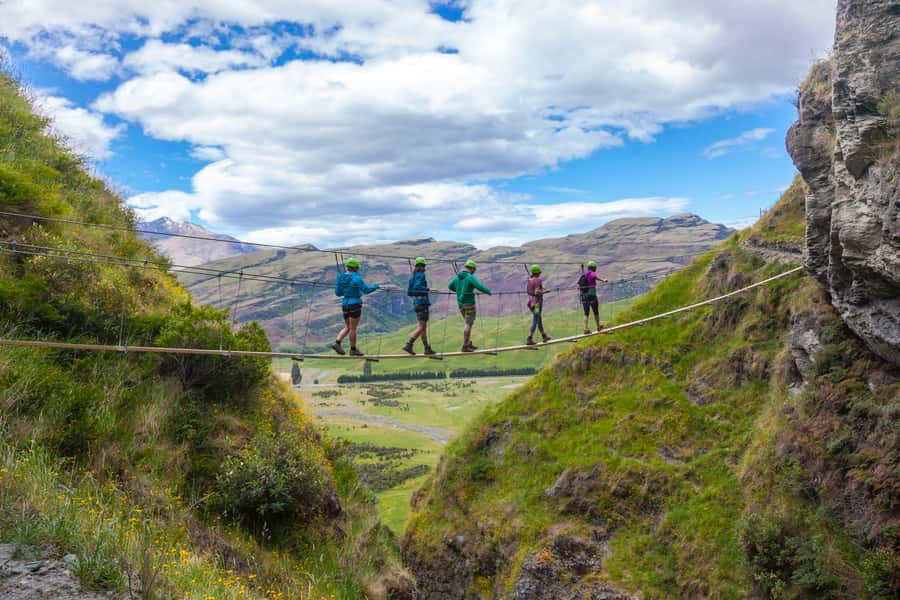
- Twin Falls via ferrata on a working farm setting with hidden waterfall features
- Small groups (max 5 per guide) for close attention and steady pacing
- Practice climb first, so the cable, rungs, and movements make sense before you commit
- Suspension bridges and cliff scaling on the beginner route for real thrills
- Snacks and a view stop with farmland, mountains, and Lake Wanaka panoramas
- Option to keep going if you feel good (some guests upgrade beyond Level 1)
Why Twin Falls via ferrata feels different than normal hiking
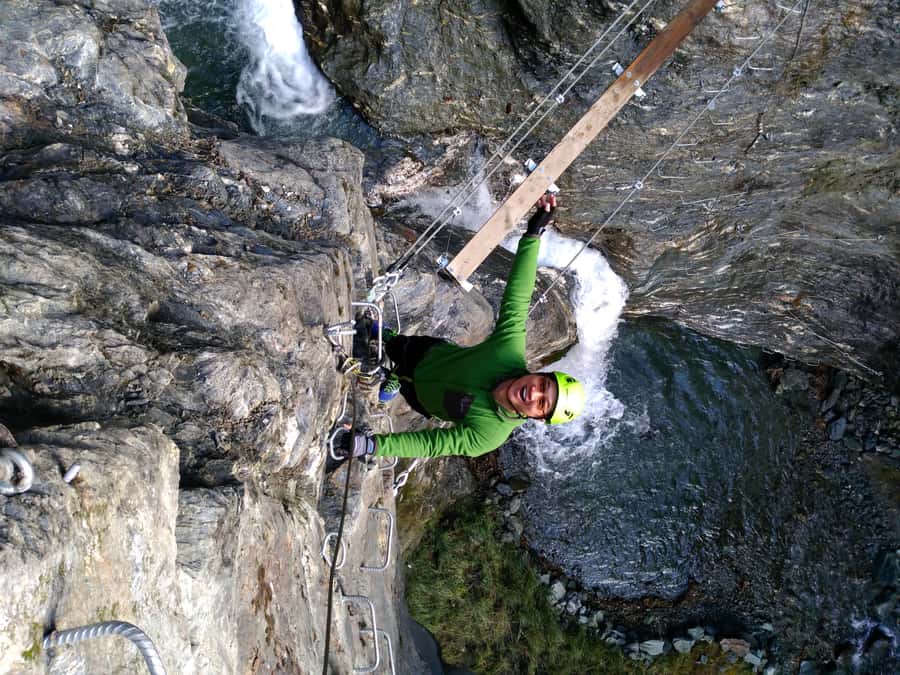
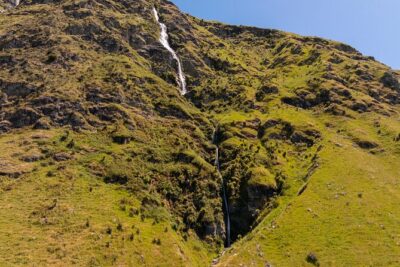
Wanaka has plenty of ways to get outdoors. This one is special because you’re not just walking to a viewpoint—you’re traveling through the waterfall itself. Twin Falls is the star, and the route is built for that “how is this even possible?” feeling.
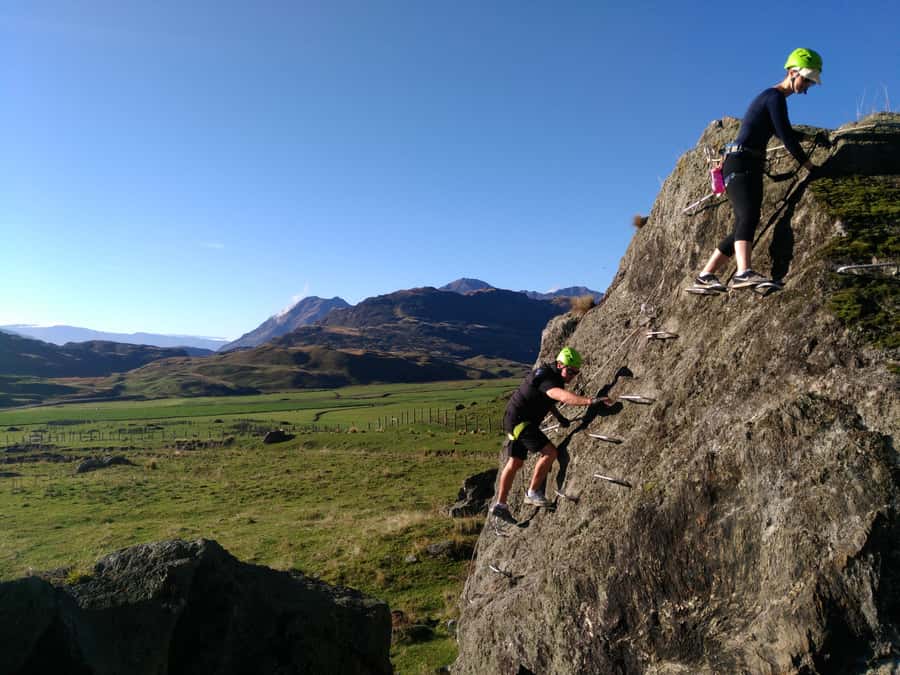
You’ll climb rock sections using fixed gear (cable, rungs, pegs) instead of searching for natural handholds like on a typical climb. That matters for beginners, because the hard part becomes learning efficient movement and staying calm—not figuring out your route.
And because the waterfall is active, the route has natural surprises: pools, side bits, and those hidden-water moments that pop up as you ascend. It’s part adventure park, part real outdoors.
More Wildwire climbs up the Wanaka waterfall
- Wildwire Wanaka- Level 2 (4 Hours)
★ 5.0 · 467 reviews - Wildwire Wanaka- Level 1 (2 Hours)
★ 5.0 · 112 reviews - Wanaka: 2-Hour Beginner Waterfall Cable Climb
★ 4.9 · 108 reviews - Wanaka: 4-Hour Intermediate Waterfall Cable Climb
★ 5.0 · 66 reviews
Getting to the Wildwire meeting gate near Wanaka
The meeting point is at Wildfire, at Twin Falls Waterfall. You’ll see a locked farm gate with the activity provider’s sign. Meet there in front of the waterfalls.
From Wanaka town, you drive west along the lake on the Wanaka–Mt Aspiring Road. Continue toward Treble Cone Ski Field and Mt Aspiring National Park. After about 20 minutes, look for a cattle stop. Pull out immediately to the left in front of two massive waterfalls, where you’ll find the gate.
Two practical notes that will save you stress:
- Aim to arrive 15 minutes early. These starts run on time.
- Wear the right shoes from the car. You won’t want to be doing a last-minute footwear change with slippery rock nearby.
The safety-first rhythm: helmet, harness, and practice climbing
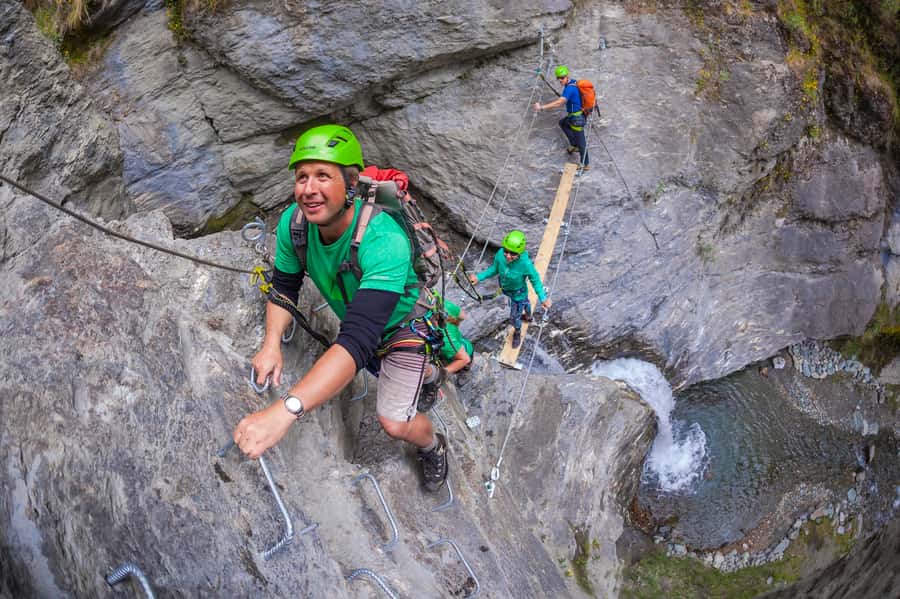
This experience works because you get trained before you’re asked to commit. You’ll meet your guides at the gate, then you’ll get helmets and harnesses and run through a safety briefing. After that, you start with a practice climb to learn the basics in a controlled way.
On the main route, you’re never just thrown onto the rock. Your group is kept small—no more than 5 people per guide—so the guide can watch your body position and correct small things quickly. That one-on-one style attention makes a huge difference for nervous climbers.
Guides you may meet include people like Rocky, Chester, Luke, Maddie, Tristan, Jasper, Sarah, Connor, and Liam (the names come from real guest experiences). The common thread is how they coach: calm, patient, and very focused on getting you moving safely.
If you’re worried about “will I be the slow one,” you’ll probably feel better once you’re on the practice section. People often think it will be chaotic. It’s usually the opposite: you learn, you try, then you go.
Those first climbing lessons: cables and rung technique for beginners
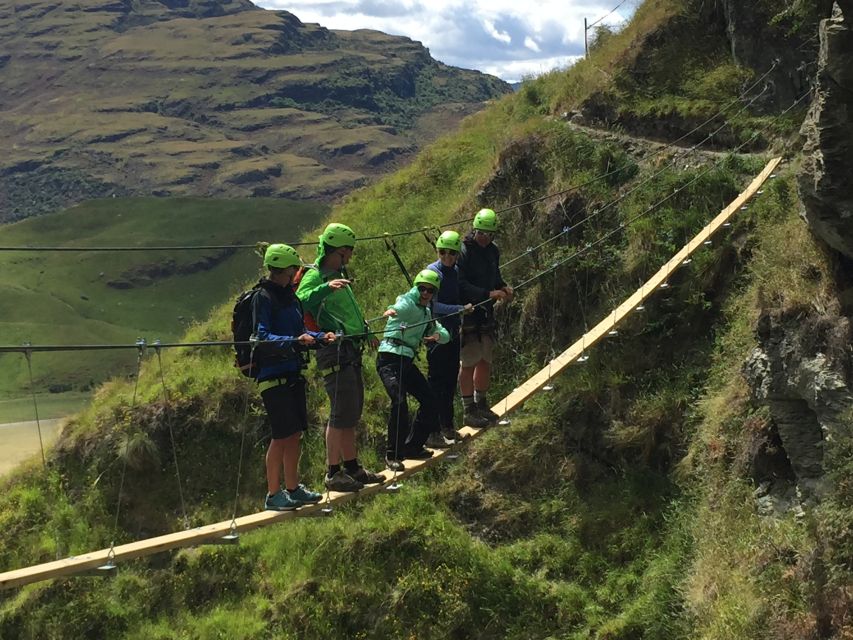
Your via ferrata introduction happens before the “real fun” climbing section. The route uses fixed hardware—cable, iron rungs, pegs, bridges, and ladders—so your job is to learn how to use it properly.
Here’s what you’re typically learning in those first minutes:
- How to keep three points of contact (hands/feet) while moving
- How to shift your weight without panicking
- How to trust the system because it’s secured (not a loose hold you’re guessing at)
- How to move on vertical and horizontal rock sections
On many beginner experiences, the equipment feels complicated. Here, it tends to click fast because the guides walk you through it and then let you repeat the movements on the practice climb.
Also, the pace is designed for first-timers. Several people doing their first outdoor cable climb said the experience felt challenging but not overwhelming once instruction was done well. That’s what you should aim for: learning to feel stable before it turns physical.
More quick trips to slot into a Queenstown day
The waterfall climb itself: 1 hour of bridges, rock, and hidden falls
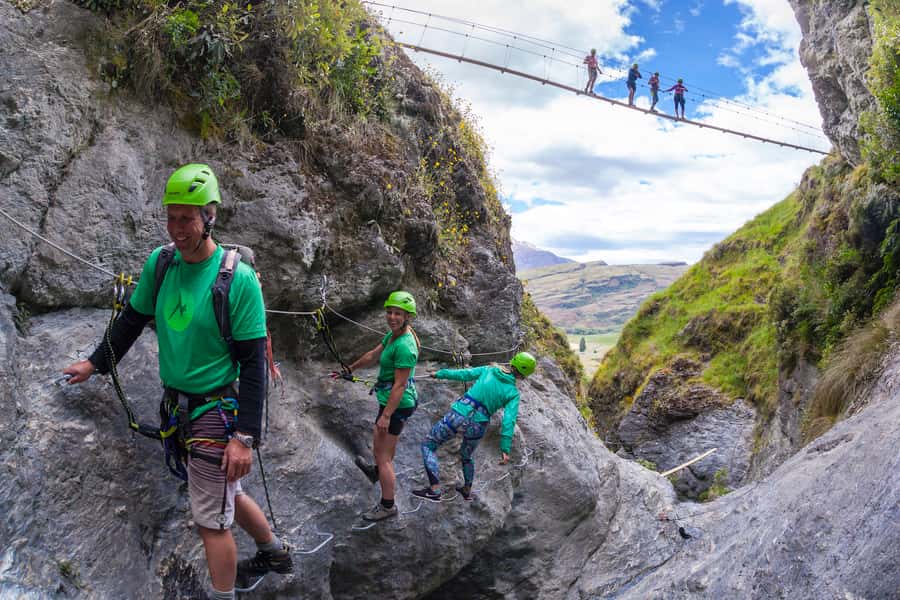
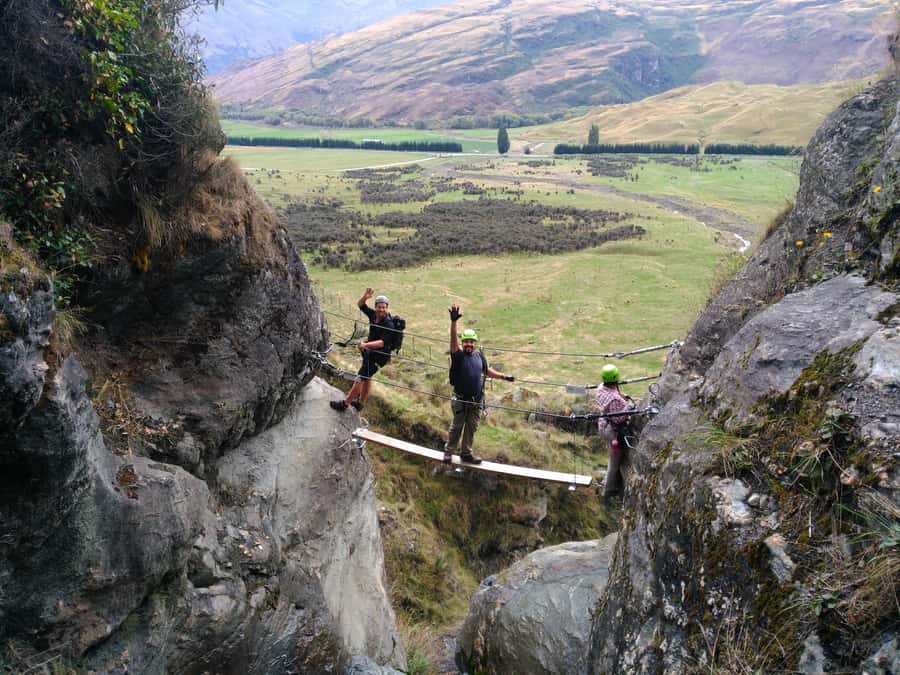
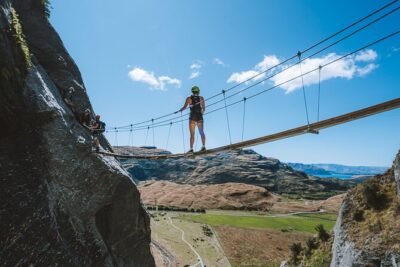
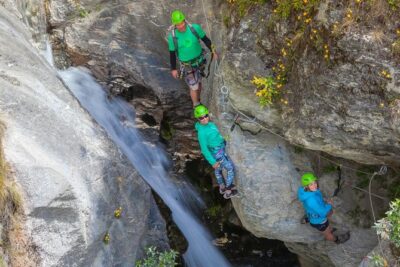
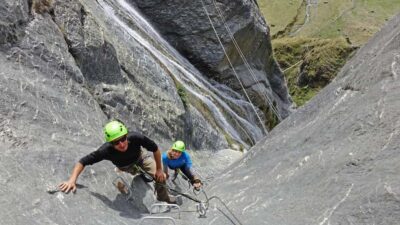
After a short walk up to the cliffs, the route gets more “real.” On the beginner climb, you’re looking at about 1 hour scaling vertical and horizontal rock, then crossing suspension bridges over pools as you move through the waterfall area.
This is where the experience earns its reputation.
- You get real climbing effort, not just a scenic ladder.
- You deal with exposure on bridge crossings, which is thrilling if you handle heights, and intimidating if you don’t.
- You pass those waterfall-and-pool moments that feel like they’re in the right place at the right time.
The suspension bridges are the part that makes people talk afterward. Even when you feel safe, you’re still on a moving-feeling structure above water and rock. Guides help you with timing and technique so you’re not fighting your own fear.
How challenging is it? It’s physically active. But multiple guests who weren’t expert climbers described it as doable with beginner-level instruction. You don’t need prior climbing experience. You do need enough comfort using your legs and arms together while staying controlled.
One honest consideration: the route is not a “choose your own speed” activity. You’ll need to follow the guide’s pace, and if you’re freezing up on exposed sections, it can feel longer than you expect.
The snack and the view stop: farmland, mountains, and Lake Wanaka
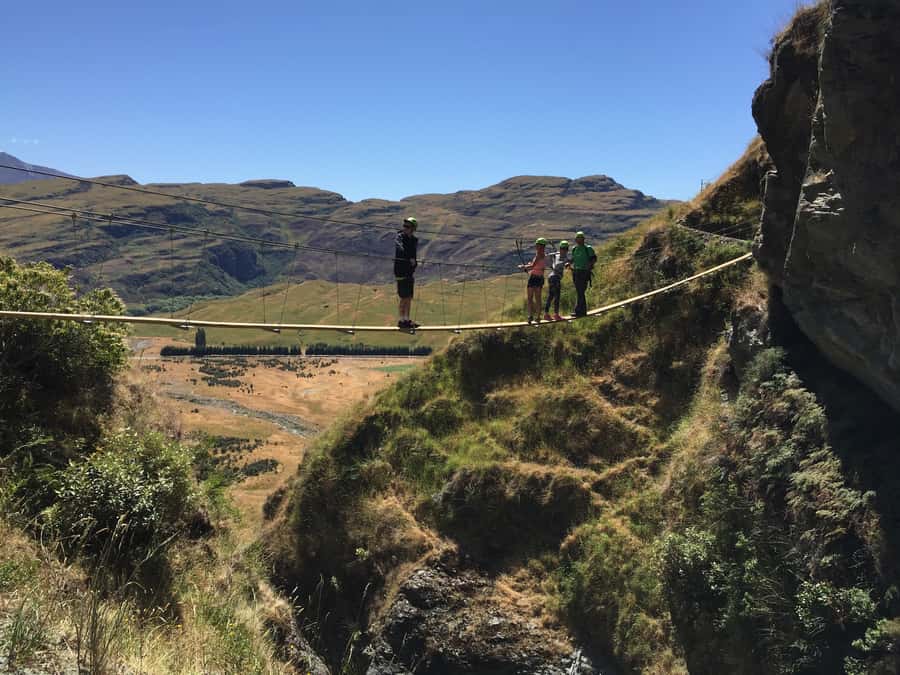
At the end of the trail, you get a small break with a snack and drink. This pause is more than a morale boost—it’s where you actually absorb what you just did.
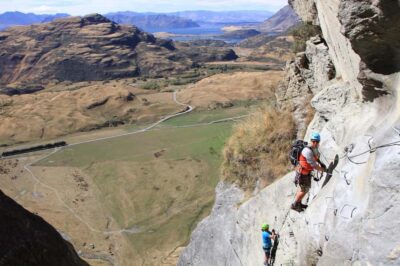
From that vantage point, you’ll see panoramic views over farmland, mountain ranges, and Lake Wanaka. It’s also a moment to check how you feel physically. Some guests choose to stop after the beginner route. Others are encouraged to continue if they have the comfort and energy for more.
If you’re considering upgrading beyond the beginner line, use this break to be honest with yourself. People often decide to keep going because they feel strong after mastering the first section. Other people decide it’s perfect exactly as planned. Both are valid.
The descent: getting back down in about 15 minutes
When you’re finished, you’ll start a return down to the base. The descent is about 15 minutes back down the mountain to the waterfall area.
Even though it’s shorter, expect your legs to feel it. After climbing rock sections and holding yourself steady on fixed gear, walking down can make your thighs and calves feel worked.
The good news: you’re usually not doing technical climbing on the way down. It’s about getting back safely, then letting your body reset.
Who should do it (and who should skip it)
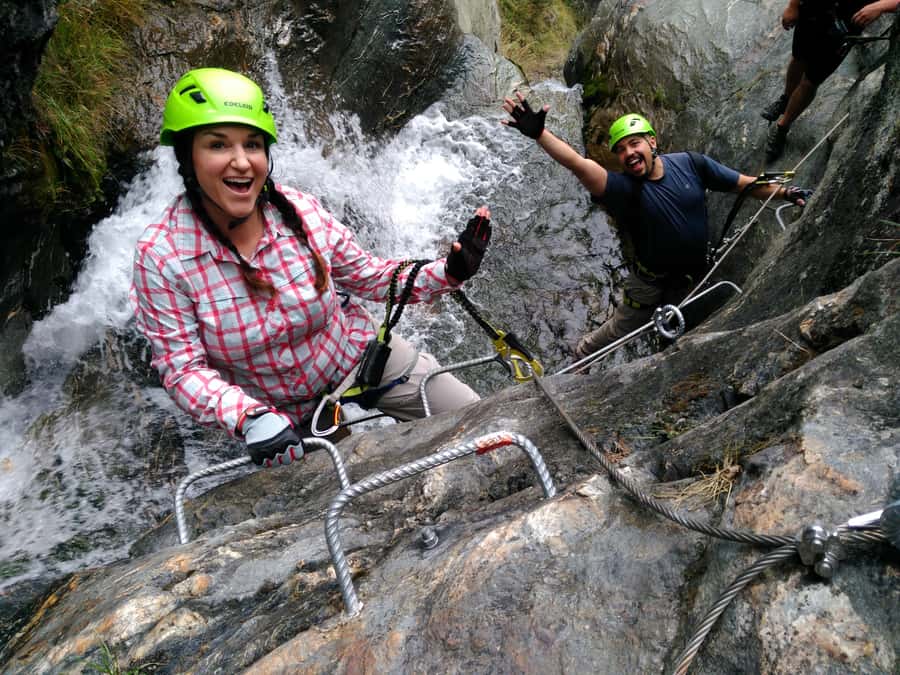
This is best for people who want an outdoor thrill that still feels controlled. It’s recommended for a moderate fitness level because it mixes hiking, rock climbing, and walking.
You also need:
- Full body mobility
- Comfort with heights (especially on suspension bridges)
- The ability to wear and use climbing safety gear confidently
It’s not suitable for:
- Children under 10 years
- People under 120 cm (3 ft 9 in)
- People under 40 kg (88 lbs) or over 120 kg (264 lbs)
- People with mobility impairments
- Anyone who can’t manage the combination of hiking + climbing movements on the route
And please take footwear seriously. Open-toed shoes are not allowed. Wear hiking shoes so you’ve got traction and protection.
If you’re the kind of traveler who gets anxious at heights but wants to face it with support, this can still work. Many guests specifically said they felt safe even when they were nervous. The key is trusting the process: practice first, then go step by step.
Price and value: what $118 buys you in real terms
At $118 per person for about 3 hours, this isn’t a cheap “activity.” But it also isn’t overpriced for what you’re actually getting.
You’re paying for:
- An expert guide
- Safety briefing plus climbing safety equipment (helmet + harness)
- Introductory training climb before the main route
- Snacks and water during the experience
- A route design that puts beginners on real via ferrata hardware (not just easy scenery)
What’s not included is simple: you’ll want a plan for water bottle needs outside the provided drinks. (The tour includes water, but your personal bottle habit matters if you’re sensitive to thirst or weather.)
Value-wise, small-group guidance is a big part of the cost justification. When a guide is watching you on each section, you’re more likely to finish feeling proud instead of wiped out or stressed.
If you compare this to a guided “view hike,” the difference is obvious: you’re buying a structured skills experience, plus equipment, plus real physical challenge.
Practical tips that make the climb smoother
If you want the best odds of having fun (not just surviving), these are the details that matter most:
Bring the right basics
- Wear weather-appropriate clothing.
- Pack a daypack.
- Bring water. (Even if you get drinks during the climb, hydration is still on you.)
- Avoid open-toed shoes.
GoPro and cameras
You can bring a camera at your own risk. If you use a GoPro, it’s recommended to attach it to your person, or ask a guide about a helmet setup with a slide attachment. That’s helpful because handling devices with gloves and harness gear can get awkward.
Arrive on time
Arriving 15 minutes early helps you avoid rushing through setup. Helmet and harness fitting takes a moment, and the day runs better when you’re calm.
Plan for nerves
If you’re thinking you’ll be scared on the bridges, you’re not wrong. A lot of the thrill is that moment when your brain realizes you’re secure and your guide is right there with instructions. Listen, move slowly, and don’t rush steps.
Final call: should you book the Wanaka beginner waterfall cable climb?
Book it if you want a hands-on South Island adventure that mixes skills, scenery, and adrenaline—without needing prior climbing experience. It’s a strong choice for active couples, families with kids old enough to meet the minimum, and solo travelers who want a guided challenge with real coaching.
Skip it if you:
- can’t handle heights and bridges at all
- don’t have full body mobility
- fall outside the minimum/maximum height and weight ranges
- want a mostly flat, low-effort outing
My practical advice: pick the beginner climb if you’re new to via ferrata. Once you’ve learned the hardware during the practice section, you’ll understand the rhythm fast. If you feel good at the view stop and the guides think it fits, the option to continue (often to Level 2) can turn a great outing into a standout memory.
FAQ
What exactly is the Wanaka 2-hour beginner waterfall cable climb?
It’s a guided beginner via ferrata style climb to Twin Falls Waterfall. You use fixed cables, iron rungs, pegs, and you’ll cross suspension bridges and move through rock sections to reach a viewing area, with a guided descent back down.
How long does the experience take?
The total duration is listed as about 3 hours, including training, climbing time, and the descent.
What should I bring with me?
Bring water, weather-appropriate clothing, a daypack, and hiking shoes. Avoid open-toed shoes.
Do I need prior climbing experience?
No climbing experience is required. You get a safety briefing and an introductory training climb so you can learn the movements before the main route.
How big are the groups?
The route is run with small groups of no more than 5 people per guide.
What are the minimum age and weight requirements?
The minimum age is 10 years old, with a minimum weight of 40 kg.
Is it safe for someone who’s nervous about heights?
The experience is guided with safety equipment, briefings, and a practice climb. Many guests who were nervous about heights reported feeling safe during the climb, especially once they had instruction and support.
A Quick Two Hours More
- Stevensons Island 2-Hour Cruise and Nature Walk★ 4.6 · 160 reviews
- Wildwire Wanaka- Level 1 (2 Hours)★ 5.0 · 112 reviews
Higher Up the Wanaka Falls
- Wildwire Wanaka- Level 2 (4 Hours)★ 5.0 · 467 reviews
- Wildwire Wanaka- Level 1 (2 Hours)★ 5.0 · 112 reviews
- Wanaka: 4-Hour Intermediate Waterfall Cable Climb★ 5.0 · 66 reviews
- Wanaka: Waterfall Climb and Canyon Tour★ 5.0 · 6 reviews
Fresh on the Queenstown pages

Wanaka Waterfall Climbs, compared.
 ★ 5.0Wildwire Wanaka- Level 2 (4 Hours)From $232467 reviews
 ★ 5.0Wildwire Wanaka- Level 1 (2 Hours)From $126112 reviews
 ★ 5.0Wanaka: 4-Hour Intermediate Waterfall Cable ClimbFrom $22466 reviews
 ★ 5.0Wanaka: Waterfall Climb and Canyon TourFrom $1966 reviews
 ★ 5.0Wanaka: 6-hour Advanced Waterfall Cable ClimbFrom $4484 reviews
 ★ 5.0Wildwire Wanaka- Climb & Canyon (4-5 Hours)From $2044 reviews
Browse the lists this tour appears in