
Review · SKYDIVING
Wanaka: Tandem Skydive Experience
Wanaka’s tandem parachute jump is pure adrenaline with big views. You choose your height (9,000, 12,000, or 15,000 feet) and go from scenic flight over the Southern Alps straight into fast freefall with speeds up to 200 kph. I like that the experience is built around the scenery, including the chance to spot Mount Cook and multiple lakes from above.
My favorite part is how seriously the operation takes safety and coaching. You get a full briefing, fitted harness gear, and a Tandem Master assessment at the drop zone, and the vibe tends to be confident and calm even if you’re nervous (instructor names like Chris and Rory come up often). One consideration: your day can run long if weather or scheduling stacks up, so I suggest you keep the rest of your itinerary flexible.
In This Review
- Key highlights you’ll feel the most
- Picking your altitude: 9,000 to 15,000 feet over Wanaka
- From check-in to harness: what the 3-hour session feels like
- The 20-minute scenic flight: Mt Cook, lakes, and the Clutha River
- The freefall: 25 to 60 seconds at up to 200 kph
- Landing under canopy: why the quiet part matters
- What happens after: de-gearing, edited video, and photos
- Price and value: is $214 worth it in Wanaka?
- Safety, limits, and who should book this (and who shouldn’t)
- Tips for nervous first-timers (and camera-free reality)
- Should you book the Wanaka tandem parachute jump?
- FAQ
- What altitudes can I choose for the tandem parachute jump?
- How long is the freefall and the canopy flight?
- What scenery will I see from the plane?
- Are cameras allowed during the jump?
- How long does the whole experience take?
- What’s included in the price?
- What are the age and weight limits?
- Where do I need to meet if I’m driving myself or using transport?
Key highlights you’ll feel the most
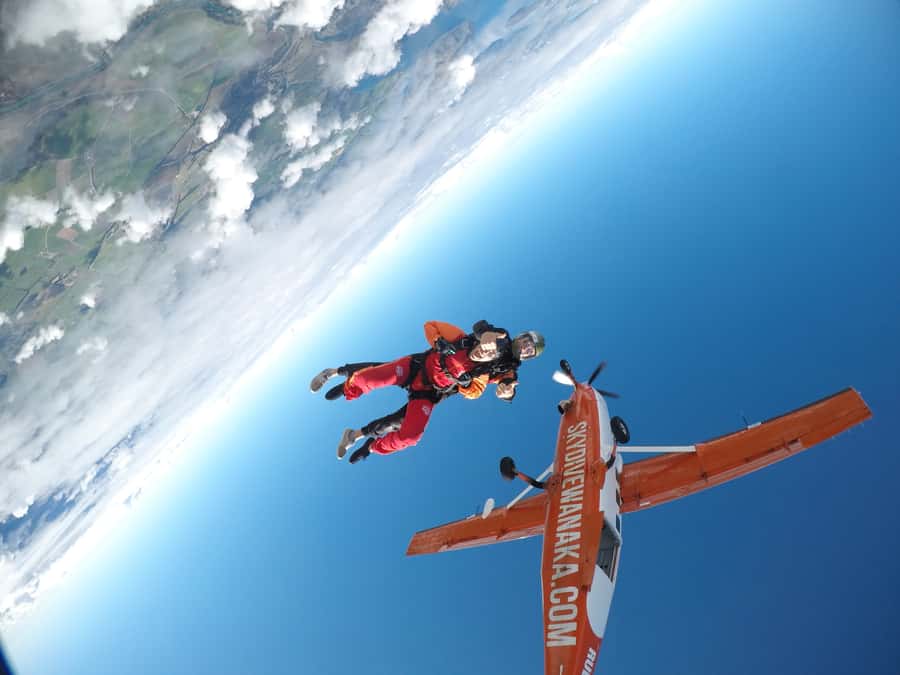
- Choose your altitude: 9,000, 12,000, or 15,000 ft for different amounts of freefall
- Get serious views for 20 minutes before you jump over the Southern Alps and nearby lakes
- Fast freefall timing: 25 to 60 seconds, reaching speeds up to 200 kph
- Controlled canopy flight: about 5 minutes back down while you look around
- Gear and kit included: jumpsuit, frap hat, goggles, gloves, and harness, plus on-site lockers
Picking your altitude: 9,000 to 15,000 feet over Wanaka
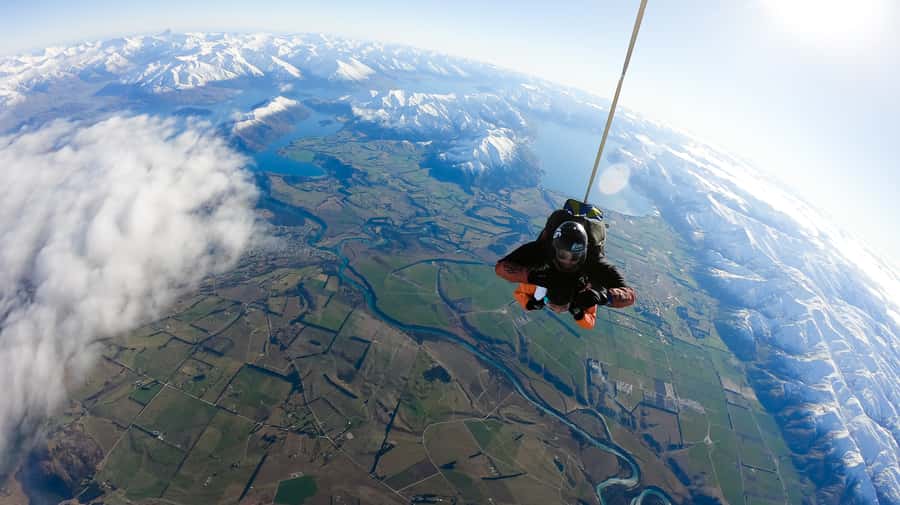
This jump is all about choice. You can go up to 15,000 feet, or pick the lower options (9,000 or 12,000) depending on how bold you feel and what freefall time you want. The higher you go, the more time you spend in the main event, which is the adrenaline rush of freefall.
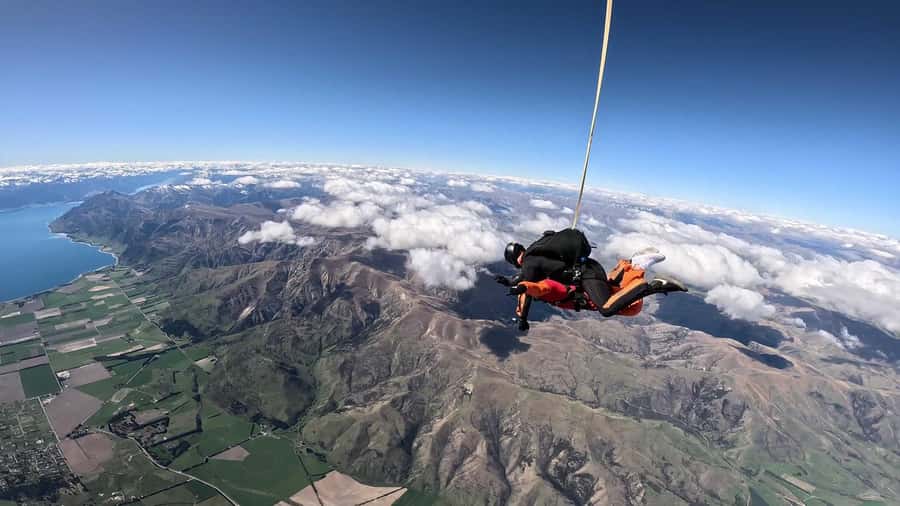
What makes Wanaka special is that the view doesn’t start when you exit the plane. During the flight to altitude, your tandem instructor points out landmarks as you rise above Central Otago: the Southern Alps, and the famous peaks you hope to recognize fast from the air, including Mount Cook and Mount Aspiring. You’ll also spot a number of lakes and the Clutha River. That matters because it turns the experience into more than just a thrill. It becomes a moving postcard.
If you’re deciding between altitudes, here’s a practical way to think about it:
- If you’re a first-timer and want the experience without feeling too time-compressed, the 9,000 ft option can be a sweet entry point.
- If you want more freefall time and you’re comfortable with height, 12,000 ft is a strong middle ground.
- If you want the maximum wow-factor and longer freefall, go for 15,000 ft.
Other tandem skydives over the Wakatipu basin
- Wanaka: Tandem Skydive Experience
★ 4.8 · 252 reviews
From check-in to harness: what the 3-hour session feels like
The full experience runs about 3 hours, even though the actual time in the air is shorter. That’s normal for a tandem parachute jump: there’s check-in, briefing, gear fitting, paperwork/safety checks, and then loading the plane.
You’ll start when you walk in and meet the crew at the base. Expect a briefing that covers how things work mid-air and what to do on landing. Then you’ll gear up with the included kit: a jumpsuit, frap hat, goggles, gloves, and a harness. Closed-toe shoes are required, and you’ll want to arrive wearing something you can safely move in once you’re strapped in.
One helpful detail that makes the whole thing feel smoother: you’re not just handed gear and sent off. The operation includes on-site lockers for valuables, plus access to base facilities like internet kiosks and free Wi‑Fi. So if you’re waiting on weather or your turn, you’re not stuck twiddling your thumbs in a parking lot.
Also, you should expect a Tandem Master assessment at the drop zone. That’s part of the normal safety process, and it’s good to know up front because it means they’re checking that you fit securely into the harness and that conditions are suitable.
The 20-minute scenic flight: Mt Cook, lakes, and the Clutha River
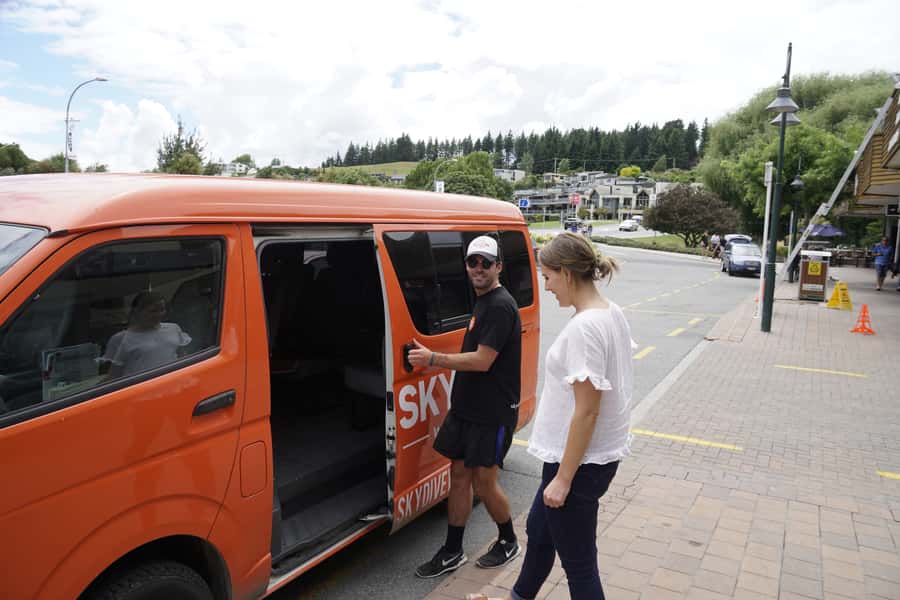
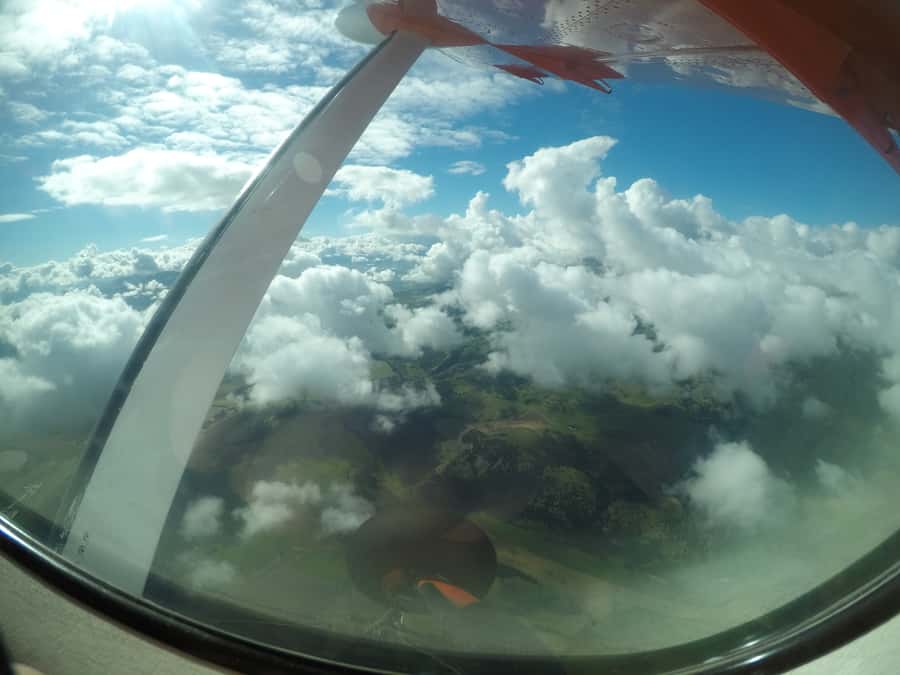
Your flight time to altitude is about 20 minutes, and it’s honestly when you’ll start realizing what you’re looking at. From the plane, it’s easier to pick out the shapes of the Southern Alps and understand how the lakes and rivers connect.
Your instructor will point out major features along the way. The big names to watch for include:
- Mount Cook
- Mount Aspiring
- The Southern Alps
- A number of lakes
- The Clutha River
If you’re someone who gets nervous right before the jump, this part helps. You get time to focus on learning the view and listening to instructions rather than thinking about what comes next. You’ll also see how the whole area sits below you, which makes the freefall and canopy segments feel less random.
And yes, the plane ride has its own thrill. Even before the door opens, you can feel the altitude building. It’s not just travel-by-air. It’s travel-by-air with a countdown.
The freefall: 25 to 60 seconds at up to 200 kph
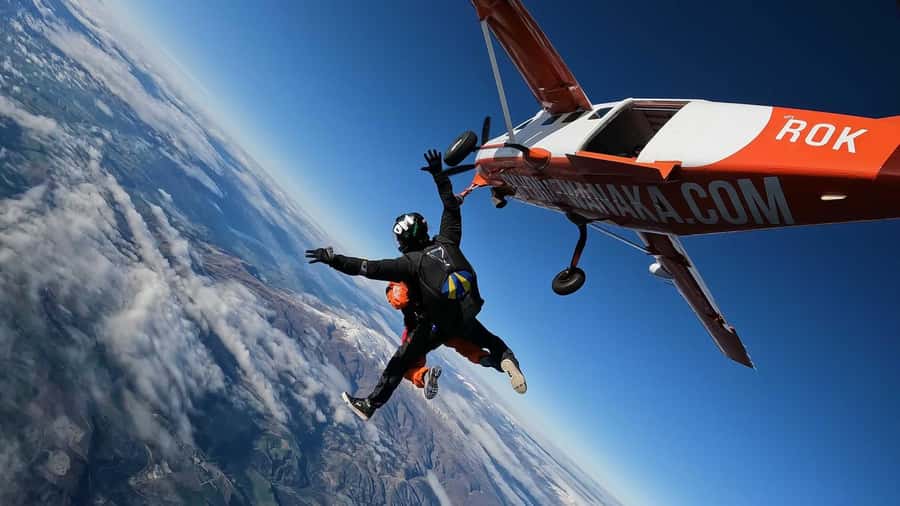
Once you reach your chosen altitude, the jump happens fast. There’s a moment of decision energy, then you’re out, and the main sensation kicks in immediately.
You’ll experience 25 to 60 seconds of freefall, with speeds up to 200 kph. That speed number sounds dramatic because it is dramatic. What it feels like, in practical terms, is total-body focus: you’re breathing, reacting, and learning the instructor’s cues while the world drops away quickly under you.
Timing depends on your altitude choice. The higher the jump, the longer you’ll be in freefall before the parachute deploys. Either way, the experience is built to be short enough to feel intense, not long enough to turn into something you have to endure.
If you’re anxious, here’s the truth: the instructor’s job is to keep you calm and moving through the steps. Names like Chris and Lucas show up often in the stories people tell after their jump, and the consistent theme is that the coaching feels professional and reassuring, not rushed or robotic.
Also important: cameras are not allowed on the jump. That can be a surprise if you packed your phone. The experience includes professional photo/video options instead, which you’ll handle right after.
Landing under canopy: why the quiet part matters
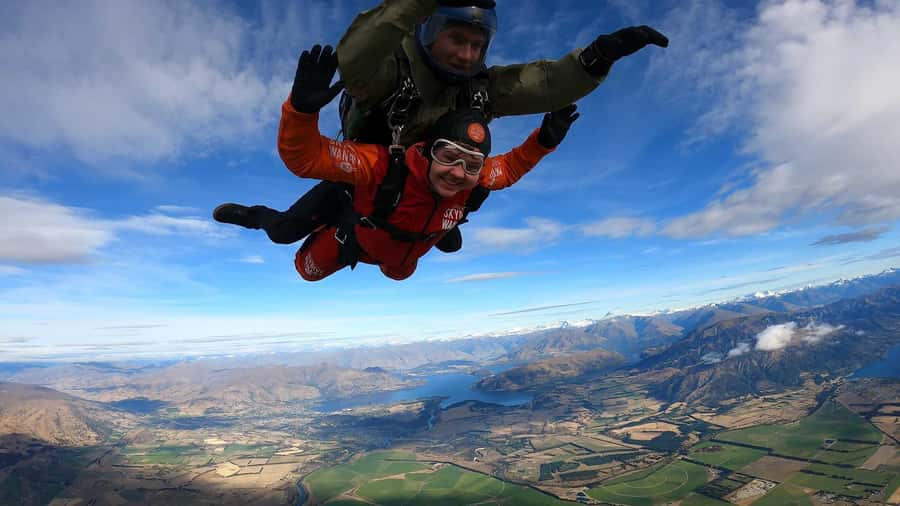
After freefall, you’ll switch from adrenaline mode into control mode. Your parachute opens and you’ll glide under canopy for about 5 minutes back to the drop zone.
This is the part where your brain catches up. The speed is lower, and you can look around for real. It’s also when you notice how clear the scenery is from above Wanaka. The Alps, lakes, and river systems that felt abstract from the plane become real, because you have time to scan them.
One note if you’re sensitive to motion: at least one person mentioned motion-sickness concerns related to the spinning sensation once the parachute deploys. If you know you react to motion, it’s worth thinking about that before you commit, and asking the team what they recommend.
Landing itself is usually smooth because it’s designed for tandem setups. You’ll be de-geared after you come back, and the ground crew will get you sorted so you can enjoy the post-jump moment.
What happens after: de-gearing, edited video, and photos
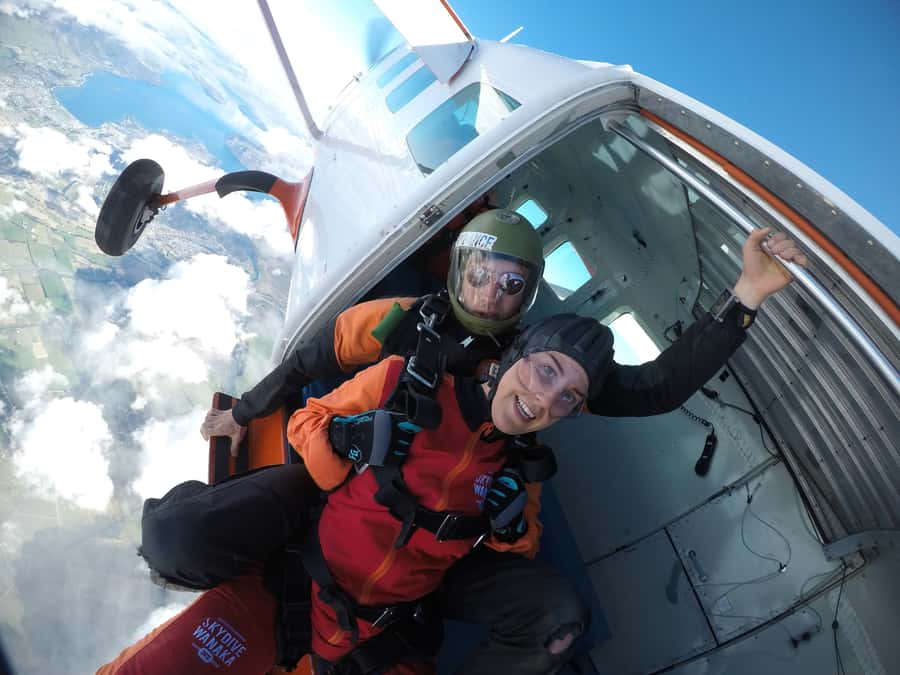
After you land, expect the best kind of chaos: smiling, fist pumps, and that shaky-laugh feeling that says you just did something massive. Then you head back to the hanger area to be de-geared.
Next comes the part you’ll care about if you want proof. You’ll receive your edited video and photos after the jump, and you’ll plug it into a computer to view it with friends and family. Photo and video packages are available to purchase at check-in, and since cameras are not allowed during the jump, this is where your memories get saved.
A practical heads-up: if you want the best value, decide ahead of time whether you’re buying photos/video or going without. The base experience price covers your jump and the in-air segments, but the imagery package is optional.
Price and value: is $214 worth it in Wanaka?
At $214 per person, this isn’t a bargain. It is, however, fairly priced for what you’re getting: an experience that includes the tandem instructor, safety gear, multiple altitude options, and a full day’s operation plus professional support. You’re not paying just for the few minutes in the air. You’re paying for the plane time, trained team, safety equipment, drop zone infrastructure, and the photo/video workflow.
So the real question is: does this day replace other big-ticket activities in your trip? For many people, yes. A tandem parachute jump checks a bucket list box with a level of intensity you don’t get from museums or scenic viewpoints.
The “value” sweet spot is when you can stay flexible that day. If you’ve got time to wait for a suitable jump window and you truly want this memory, the cost starts making sense fast.
If you’re extremely budget-tight or you hate the idea of spending extra on photos/videos, you might want to plan for that now. But the jump itself includes everything you need to do it safely, including the full set of equipment and the freefall/canopy segments.
Safety, limits, and who should book this (and who shouldn’t)
This experience comes with clear rules, and they matter. All participants are subject to Tandem Master assessment at the drop zone, and you must fit securely into the harness.
Here are the limits you should know before you fall in love with the idea:
- Minimum age: 6
- Minimum weight: 30 kg / 66 lbs
- Maximum weight: 115 kg / 254 lbs
- Children 12 and under may only jump from 9,000 ft
- Pregnant women: not suitable
If you fall outside those boundaries, don’t try to force it. Tandem parachute jumps depend on fitting and safety systems that can’t be improvised.
If you’re within the limits, it’s still smart to come prepared. Bring closed-toe shoes, follow the crew’s instructions, and listen during the briefing. The whole system is built on checklists and repeat confirmations, which is part of why people come away saying they felt safe.
Tips for nervous first-timers (and camera-free reality)
If you’re nervous, you’re not alone. The common thing I’d take from the stories about instructors is that the best tandems don’t just operate the gear. They coach the mind. That’s why names like Chris show up in people’s memories: the energy is described as professional and calming, with hype that doesn’t feel reckless.
Here’s how to set yourself up for a good headspace:
- Tell the crew you’re nervous right away. They’re used to it.
- Pay attention during the briefing. Knowing what comes next reduces the scary-unknown feeling.
- Wear your closed-toe shoes and keep accessories minimal. You’ll be put into gear quickly.
- Remember: no cameras are allowed during the jump, so plan on the included day-of imagery process if photos/video matter to you.
Also, keep one eye on timing. Some schedules can shift. One person noted a longer wait for shuttle return, and another mentioned that their jump time slipped because of a late arrival of another party. It’s rare, but it’s smart to treat the day as a dedicated session, not a quick in-and-out side quest.
Should you book the Wanaka tandem parachute jump?
Book it if you want a genuine “I can’t believe I did that” moment with real New Zealand scenery attached. This is ideal for first-timers who want a guided, controlled setup (tandem instructor, full briefing, fitted harness gear) and for people who want both thrills and landmark views in one go.
Skip it if you can’t handle height or you know motion sensitivity is a serious issue for you. Also skip if you’re outside the weight/age limits or if the activity is not suitable for your situation (pregnancy, for example).
If you do book, give yourself breathing room on the day. Bring closed-toe shoes, keep expectations honest about camera access, and choose your altitude based on how you feel about freefall time. Then, when that Southern Alps view opens up and the plane climbs, you’ll understand why people keep coming back for round two.
FAQ
What altitudes can I choose for the tandem parachute jump?
You can choose to jump from 9,000, 12,000, or 15,000 feet.
How long is the freefall and the canopy flight?
You get 25 to 60 seconds of freefall, plus about a 5-minute flight under canopy.
What scenery will I see from the plane?
Your instructor will point out Mount Cook, Mount Aspiring, the Southern Alps, multiple lakes, and the Clutha River during the scenic flight.
Are cameras allowed during the jump?
No. Cameras are not allowed, but photo and video packages are available to purchase at check-in.
How long does the whole experience take?
Plan for about 3 hours total, including check-in and the flight time.
What’s included in the price?
Your package includes the tandem jump at your chosen altitude, freefall time, the canopy flight, an experienced tandem master, safety equipment (jumpsuit, frap hat, goggles, gloves, harness), on-site lockers, and drop zone facilities like free Wi‑Fi.
What are the age and weight limits?
Minimum age is 6. Minimum weight is 30 kg / 66 lbs and maximum weight is 115 kg / 254 lbs. Children 12 and under may only jump from 9,000 ft.
Where do I need to meet if I’m driving myself or using transport?
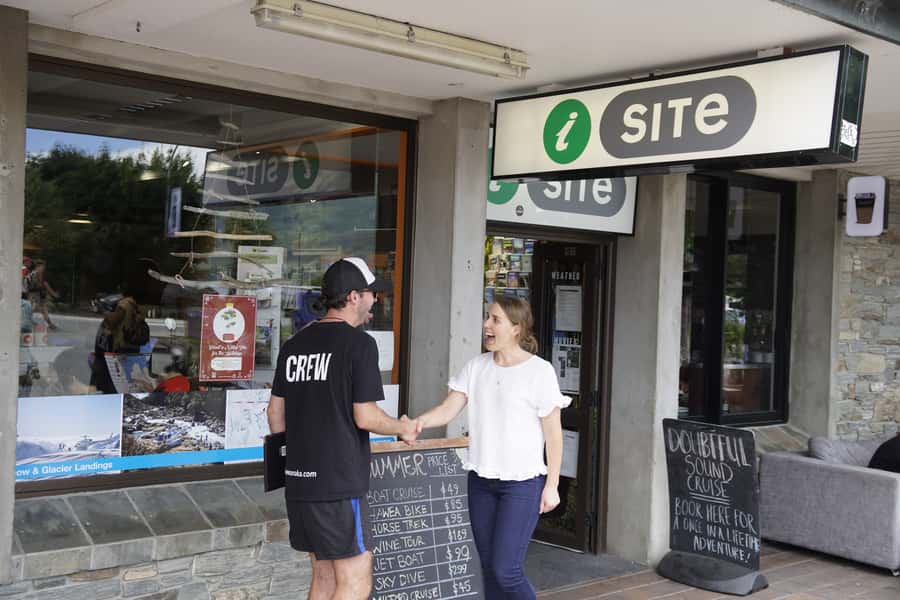
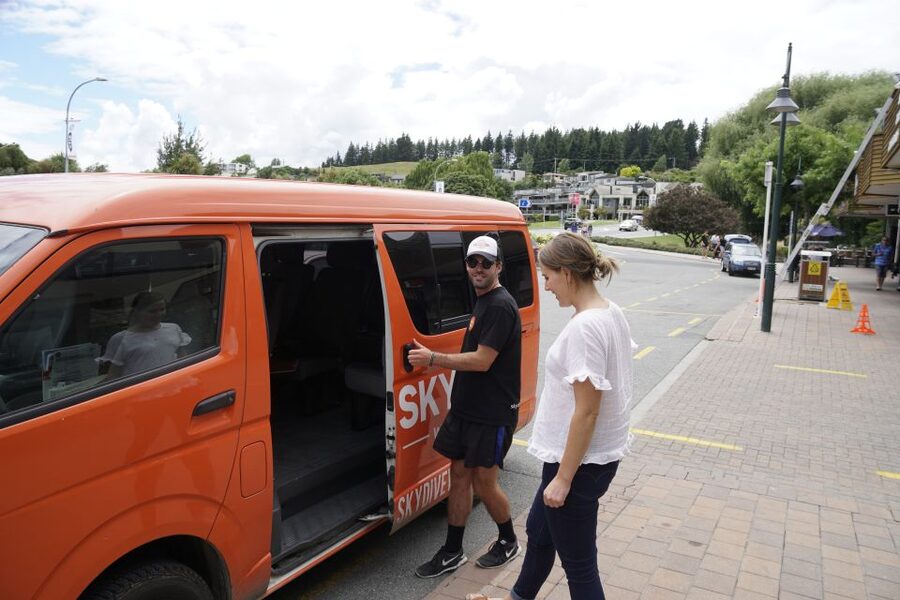
If self driving, meet at 14 Mustang Lane about 20 minutes before. For return transfers, meet outside Wanaka i‑Site about 30 minutes before.
Back Up for Another Jump
- Skydive Wanaka★ 4.5 · 91 reviews
Fresh on the Queenstown pages

Skydiving, compared.
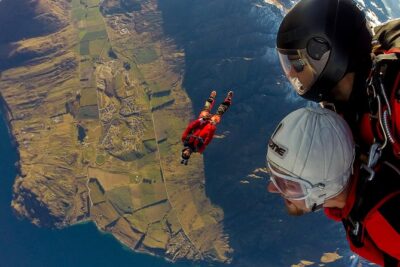 ★ 4.5NZONE Skydive QueenstownFrom $2221,438 reviews
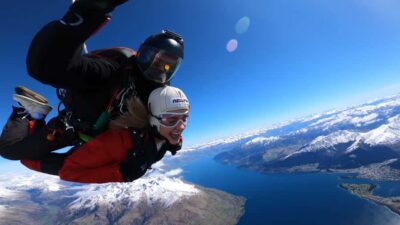 ★ 4.8Tandem Skydive ExperienceFrom $214475 reviews
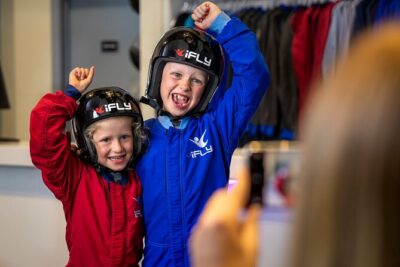 ★ 5.0iFLY Indoor Skydiving QueenstownFrom $86245 reviews
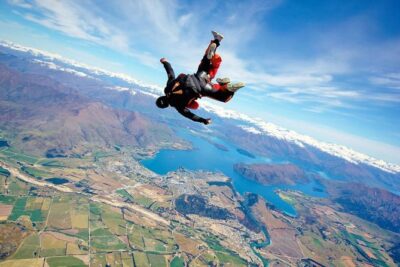 ★ 4.5Skydive WanakaFrom $22291 reviews
 ★ 4.4Ticket for 2 Indoor Skydiving FlightsFrom $8315 reviews
Browse the lists this tour appears in